Helix Piercing Keloid
How to Tell If It’s
Really a Keloid
What a keloid actually looks like, how to tell it apart from an irritation bump, how to get rid of it, at-home treatment options, and when you must see a doctor.

Helix Piercing Keloid: The Complete 2026 Guide
Jump to a section:
The vast majority of bumps that appear on helix piercings are irritation bumps — not keloids. True keloids are relatively rare and require medical diagnosis and treatment. This guide will help you tell the difference, but if you are uncertain about what you have, please consult a dermatologist or your piercer.
What Is Helix Piercing Keloid?
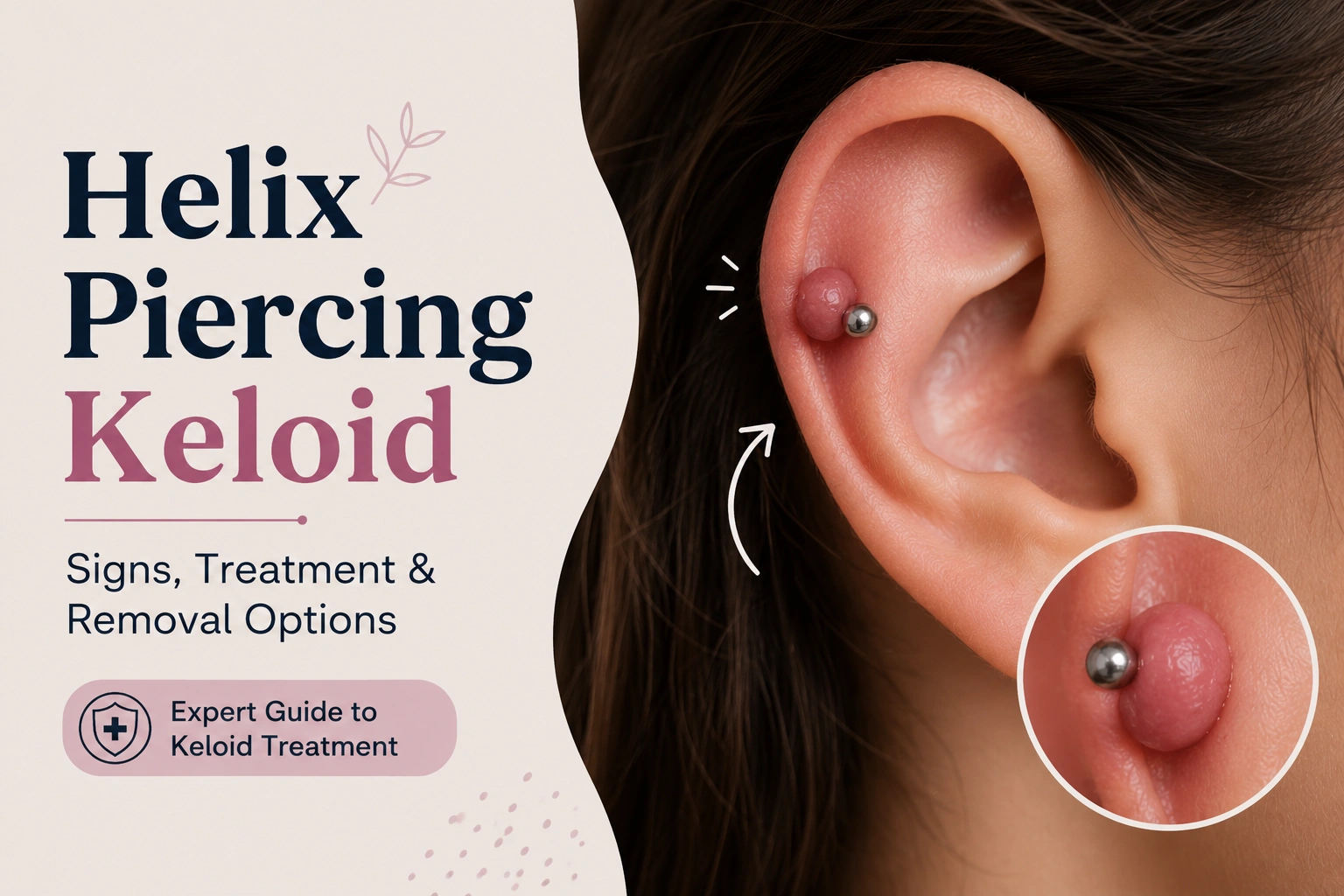
A keloid on a helix piercing is an overgrowth of scar tissue that forms at the piercing site — extending beyond the original wound boundary and continuing to grow over time. Keloids develop when the body’s wound-healing process goes into overdrive, producing excess collagen that builds up into a raised, firm mass larger than the original injury.
Keloids are classified as a benign fibrous skin tumor — they are not cancerous, not contagious, and not dangerous in a medical sense, but they can be cosmetically distressing, sometimes itchy or tender, and they do not resolve on their own without treatment. Unlike normal scars or hypertrophic scars, keloids grow progressively and extend clearly beyond the piercing site itself.
It is important to understand that true keloids are a genetic condition. If you develop a keloid on your helix piercing, it is because your genetic makeup predisposes your body to this overactive scarring response — not because of anything you necessarily did wrong during aftercare. Keloids are significantly more common in people of African, Hispanic, and Asian descent, and in people with a personal or family history of keloid formation.
The helix is one of the ear’s higher-risk zones for keloid formation because cartilage piercings experience more trauma during healing than lobe piercings. However, the absolute risk remains low even in predisposed individuals — and again, most bumps that appear on helix piercings are not true keloids.
- Type: Overgrowth of scar tissue beyond wound boundary
- Cause: Genetic predisposition + wound trigger (piercing)
- Appearance: Firm, raised, smooth, shiny — grows beyond piercing site
- Does it resolve alone? No — requires medical treatment
- Is it dangerous? Not medically, but can be uncomfortable
- Treatment: Dermatologist — steroid injections, silicone, surgery
- Confused with: Irritation bumps (much more common)
Keloid vs Irritation Bump — How to Tell the Difference
This is the most important section of this guide. The vast majority of helix piercing bumps — estimated at 90–95% — are irritation bumps, not keloids. Misidentifying an irritation bump as a keloid leads to unnecessary panic and, worse, inappropriate treatment that can make the bump worse.
Here is a detailed, side-by-side comparison to help you identify what you actually have:
🔴 True Keloid
- Grows beyond the piercing site boundary
- Firm, hard, almost rubber-like texture
- Smooth, shiny surface
- Pink, red, or darker than surrounding skin
- Continues growing over weeks and months
- Does not improve with better aftercare
- May be itchy, tender, or occasionally painful
- Appears weeks to months after piercing
- Family or personal keloid history common
- Requires dermatologist treatment
🟡 Irritation Bump
- Stays at or around the piercing site
- Softer, more fluid-filled feeling
- May have a small white/clear head
- Pink or reddish, matches skin tone at edges
- Stabilizes in size — does not keep growing
- Improves when irritation source is removed
- Tender when touched but not constantly painful
- Appears days to weeks after a specific trigger
- No family history needed — anyone can get one
- Resolves with corrected aftercare in 2–4 weeks
Ask yourself: Is the bump growing beyond the actual piercing site? And: Is it getting bigger over weeks and months despite corrected aftercare? If yes to both — see a dermatologist. If no — you almost certainly have an irritation bump, and improved aftercare will resolve it.
Hypertrophic Scar — The Third Type
There is a third type that sits between the two: a hypertrophic scar. This is raised scar tissue that stays within the wound boundary (unlike a keloid that grows beyond it) and is caused by ongoing trauma or irritation. Hypertrophic scars on helix piercings look more dramatic than irritation bumps but are still not true keloids. They often improve significantly when the root cause — usually poor jewelry material, ongoing pressure, or chronic snagging — is addressed.
| Feature | Irritation Bump | Hypertrophic Scar | Keloid |
|---|---|---|---|
| Boundary | Within piercing | Within wound | Beyond wound |
| Texture | Soft/fluid | Firm raised | Hard/rubbery |
| Growth | Stable | Stable | Progressive |
| Improves alone? | Yes — quickly | Yes — slowly | No |
| Treatment needed? | Aftercare fix | Cause removal | Doctor required |
| How common? | Very common | Common | Rare |
Causes & Risk Factors for Helix Piercing Keloids
A keloid requires two things to form: a wound trigger (the piercing) and a genetic predisposition to overactive scarring. You cannot develop a true keloid without the genetic component — no matter how poorly you care for a piercing, it will not produce a keloid if your genetics do not predispose you to them.
Primary Risk Factors
- Genetic predisposition: The single most important factor. If you or a first-degree relative has a history of keloid formation, your risk is significantly elevated
- Ethnicity: Keloids are 15–20 times more common in people of African, Hispanic, and Asian descent than in people of Northern European descent
- Age: Young people (10–30 years) are at higher risk than older adults
- Hormonal factors: Keloids are more common during puberty and pregnancy, suggesting hormonal influences
- Previous keloids: If you have had a keloid anywhere on your body, your risk of forming another is high
- Cartilage vs lobe: Cartilage piercings carry higher keloid risk than lobe piercings due to the nature of cartilage healing and the greater trauma involved
Contributing Factors (Do Not Cause Keloids Alone)
- Piercing trauma — gun piercings create more tissue damage than needle piercings
- Infection at the piercing site
- Repeated trauma to a healing piercing
- Poor quality jewelry materials causing ongoing irritation
If you have a personal or family history of keloids, discuss this with an experienced piercer before any cartilage piercing. Some people with keloid history choose to avoid cartilage piercings entirely, while others proceed with extra precautions and careful monitoring. This is a personal decision best made with full information.
What Does a Keloid on a Helix Piercing Look Like?
Understanding what a keloid actually looks like — as opposed to an irritation bump or hypertrophic scar — is essential for correct identification and appropriate action.
Visual Characteristics of a True Helix Keloid
- Size: Larger than the piercing site — keloids extend clearly beyond the piercing hole itself. They can range from a few millimetres to several centimetres in diameter
- Shape: Dome-shaped, rounded, or irregular — sometimes with a “claw-like” extension beyond the wound edge
- Texture: Firm to hard — noticeably more solid than the surrounding ear tissue. Often described as rubber-like or tough
- Surface: Smooth and shiny, unlike the matte surface of normal skin
- Colour: Pink, red, or darker/more pigmented than surrounding skin. May darken over time
- Sensation: May be itchy, tender, or have a slight burning sensation. Some keloids are entirely painless
- Behaviour: Grows progressively over weeks and months — this distinguishing progressive growth is the clearest indicator of a true keloid
How Keloids Develop Over Time
A helix piercing keloid typically does not appear immediately. Most develop:
- Weeks to months after the initial piercing (not immediately)
- Often starting as what appears to be a normal healing bump
- Then continuing to grow beyond the piercing boundary
- Becoming firmer and more defined over months
- Not responding to improved aftercare or topical treatments
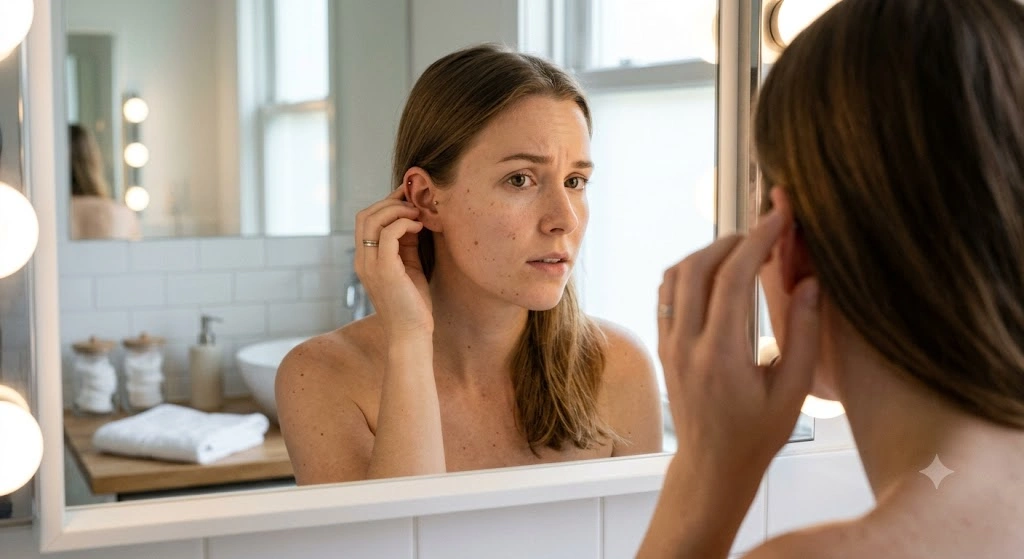
Look at your bump carefully. Does it extend clearly beyond the actual piercing hole — outward onto the surrounding cartilage surface? Is the outer edge of the bump distinctly outside the wound boundary? If the bump is localised to the piercing hole area and has not grown beyond it, you almost certainly do not have a keloid.
At-Home Treatment — What Works and What Doesn’t
This section addresses one of the most searched topics related to keloid helix piercings: can you treat a keloid at home? The honest answer depends entirely on what you actually have.
True keloids cannot be effectively treated at home. Home remedies may provide temporary symptom relief but will not remove a keloid. If you have a confirmed or suspected true keloid, please see a dermatologist. Attempting aggressive home treatment on a true keloid can make it worse.
If You Have an Irritation Bump (Most Likely)
If your bump is a common irritation bump — which is the case for the vast majority of helix bumps — these evidence-based steps will resolve it:
Irritation bumps always have a cause. Common triggers: sleeping on the piercing, snagging on hair or clothing, rotating the jewelry, using harsh cleaning products, over-ear headphones. Find yours and eliminate it immediately.
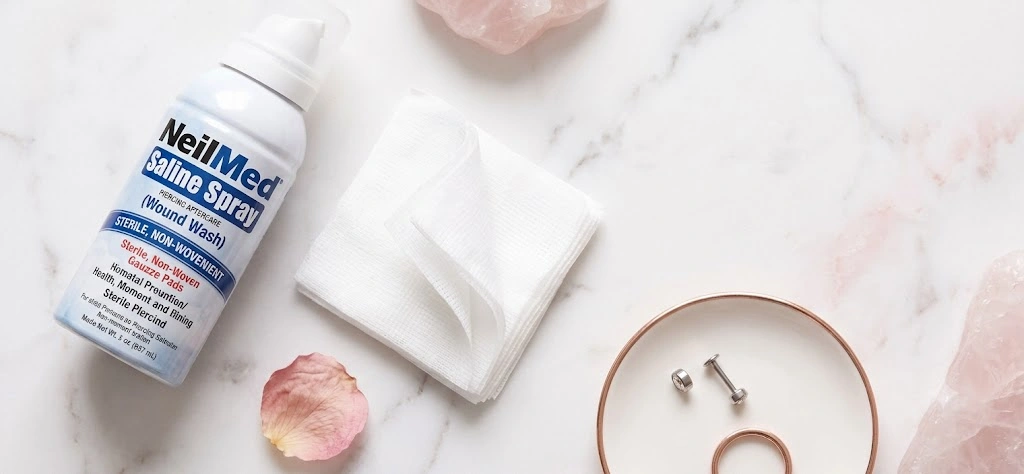
Sterile 0.9% saline spray — nothing else. No tea tree oil, no aspirin paste, no hydrogen peroxide. These harm healing tissue. Pure saline, twice daily, consistently.
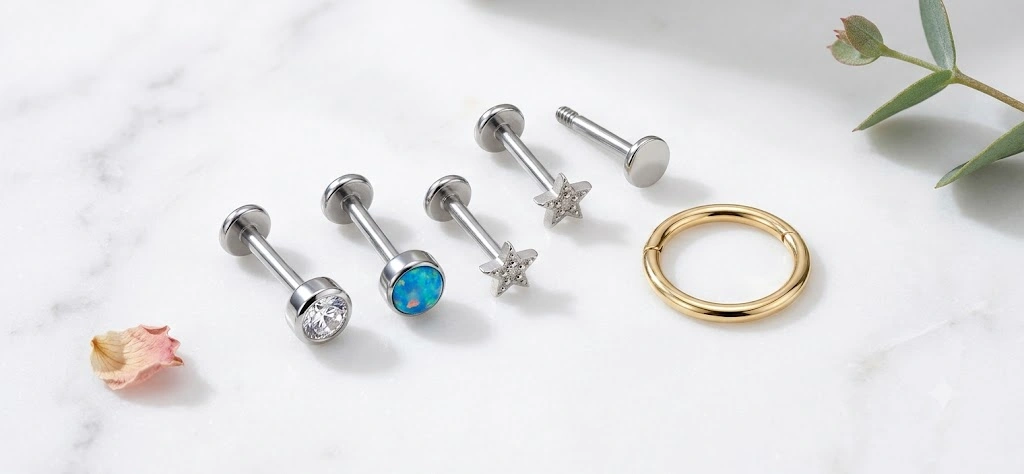
Low-quality jewelry is a major hidden cause of persistent bumps. Switch to implant-grade titanium (ASTM F136) or solid 14k/18k gold if you are not already using these materials. Unknown metal alloys cause chronic irritation.
If your post is too long and the jewelry moves excessively, it creates constant micro-trauma. See your piercer to assess whether a downsize is appropriate. Similarly, jewelry that is too tight creates pressure — another cause of bumps.
Most irritation bumps resolve within 2–4 weeks of corrected aftercare. Do not pick at the bump, do not apply additional products, and do not change jewelry during this period. Consistency is the treatment.
For Hypertrophic Scars
Hypertrophic scars (firm bumps that stay within the wound boundary) may benefit from:
- Silicone gel sheets: Applied to the healed piercing site, silicone gels have good evidence for reducing hypertrophic scar tissue over time. Consult your piercer before using on an actively healing piercing
- Jewelry material upgrade: Switching to implant-grade titanium often produces noticeable improvement in persistent hypertrophic scars
- Eliminating ongoing irritation: The same cause-removal approach as irritation bumps — hypertrophic scars that are continuously re-irritated will not improve
Home Remedies to Avoid
| Remedy | Why to Avoid |
|---|---|
| Tea tree oil | Cytotoxic — kills healing cells, causes chemical irritation, can worsen bumps |
| Aspirin paste | No scientific evidence, can cause additional irritation and dryness |
| Apple cider vinegar | Highly acidic — damages tissue and disrupts healing pH |
| Hydrogen peroxide | Kills healing cells including fibroblasts essential for tissue repair |
| Toothpaste | No benefit — causes skin irritation and chemical burns |
| Cutting or popping | Extremely dangerous — introduces infection risk, worsens scarring |
| Compression with rings/tape | Restricts blood flow, increases pressure, can worsen keloids |
Medical Treatment for Helix Piercing Keloids
If you have a confirmed true keloid — identified by a dermatologist — there are several evidence-based medical treatment options available. None of these should be attempted at home. All require professional assessment and administration.
Corticosteroid Injections (First-Line Treatment)
Intralesional corticosteroid injections (typically triamcinolone acetonide) are the most commonly used and best-evidenced first-line treatment for ear keloids. The steroid is injected directly into the keloid tissue, suppressing collagen production and reducing the mass over a series of sessions.
- Typically 3–6 sessions spaced 4–6 weeks apart
- Success rate: 50–70% reduction in keloid volume
- Possible side effects: skin thinning, depigmentation, telangiectasia
- Recurrence rate: 50% without adjunct treatment
Silicone Gel Sheets / Silicone Gel
Silicone gel products have good evidence as both a treatment and preventive measure for keloids and hypertrophic scars. For ear keloids, silicone gel (applied daily) is more practical than sheets. Often used in combination with steroid injections to improve outcomes.
Cryotherapy
Controlled freezing of keloid tissue using liquid nitrogen. More commonly used for smaller keloids. Can cause depigmentation — particularly noticeable in darker skin tones. Sometimes combined with steroid injections.
Laser Treatment
Pulsed dye laser (PDL) and other laser types can reduce redness, flatten keloid tissue, and improve texture. Most effective on early-stage keloids and often combined with steroid injections for better outcomes.
Surgical Excision (High Recurrence Risk)
Surgical removal of the keloid is possible but carries a high recurrence risk — keloids frequently regrow after excision, sometimes larger than before. Surgery is rarely used as a standalone treatment; it is typically combined with post-operative steroid injections or radiation therapy to reduce recurrence risk.
Radiation Therapy (Post-Excision)
Low-dose radiation delivered after surgical excision significantly reduces keloid recurrence rates. Used selectively due to the radiation exposure involved — typically only for large, persistent, or recurrent keloids that have failed other treatments.
A dermatologist will assess your specific keloid — size, location, your skin type, previous treatments — and recommend the most appropriate approach. For small helix keloids, corticosteroid injections combined with silicone gel is typically the first recommendation. Do not attempt any of these treatments without professional guidance.
Should I Remove the Jewelry If I Have a Keloid?
This is one of the most frequently asked questions about helix piercing keloids — and the answer is more nuanced than a simple yes or no.
For Irritation Bumps — Do NOT Remove
If your bump is an irritation bump (the most likely scenario), removing the jewelry is counterproductive. The bump will often temporarily improve or shrink when jewelry is removed — but the channel will close, and if you re-pierce, you will likely encounter the same issue. Address the cause, improve your aftercare, and keep the jewelry in.
For True Keloids — Discuss with Your Dermatologist
For a confirmed true keloid, jewelry removal is a medical decision that depends on several factors:
- The keloid’s size and stage
- Whether the piercing itself is serving as an ongoing irritant
- Your treatment plan and timeline
- Whether you want to attempt to keep the piercing long-term
Some dermatologists recommend removing jewelry before keloid treatment begins; others prefer to manage the keloid while the piercing remains in place. This decision should be made with your dermatologist — not unilaterally at home.
If you suspect any infection alongside a bump — regardless of whether it is a keloid or irritation bump — do not remove the jewelry without medical guidance. Removing jewelry during an active infection can trap the infection inside the closed channel, potentially creating a more serious abscess situation.
How to Prevent a Keloid on Your Helix Piercing
If you are at genetic risk for keloids, you cannot completely eliminate the risk of keloid formation from a cartilage piercing. However, these measures significantly reduce the risk and minimize the conditions that trigger keloid development.
If you have a personal or family history of keloids, have an honest conversation with your piercer before any cartilage work. Some people with keloid history choose lobe-only piercings to eliminate the risk.
Piercing guns cause blunt-force trauma to cartilage, creating significantly more tissue damage than a hollow needle. More damage means more aggressive healing response — and higher keloid risk in predisposed individuals.
Low-quality metal alloys cause chronic irritation that can trigger overactive scarring responses. Implant-grade titanium (ASTM F136) or solid 14k/18k gold minimizes this risk significantly.
Twice-daily sterile saline, hands off the jewelry, no rotating, no harsh products. Minimizing trauma during healing reduces the inflammatory response that can trigger keloid formation in susceptible individuals.
Use a travel pillow when sleeping, avoid over-ear headphones during healing, be deliberate when styling hair near the piercing. Every knock and bump is a healing stimulus that increases inflammatory activity.
Check your piercing regularly during healing. If a bump appears and does not respond to corrected aftercare within 3–4 weeks, see your piercer and consider a dermatologist assessment. Early intervention — before a keloid matures — produces better treatment outcomes.
If you are high-risk, some dermatologists recommend applying silicone gel to the fully healed piercing site as a preventive measure. Discuss this with a dermatologist if you have a keloid history.
Keloid Helix Piercing — FAQ
Think You Have an Irritation Bump?
Read our complete Aftercare guide — the right routine resolves most helix bumps within 2–4 weeks.
Aftercare Guide →