Everything About
Helix Piercing
From your first appointment to full healing — expert guides, aftercare routines, jewelry tips, and real answers to your biggest questions.
 ⭐ Featured
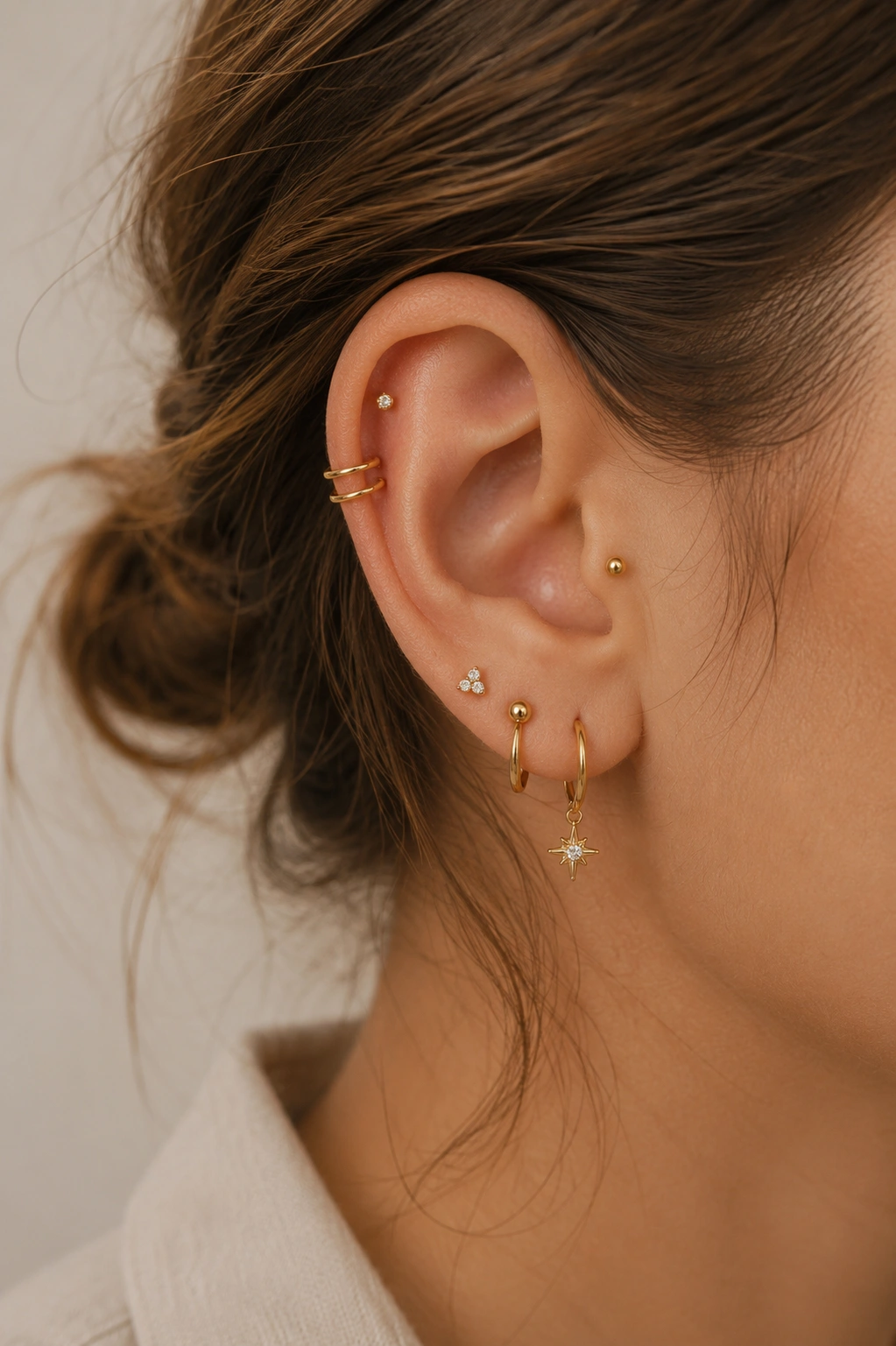
The helix is the curved outer rim of your upper ear. A helix piercing goes through this cartilage — and it’s one of the most popular ear piercings worldwide. Discover everything you need to know before your appointment.
Read Full Guide →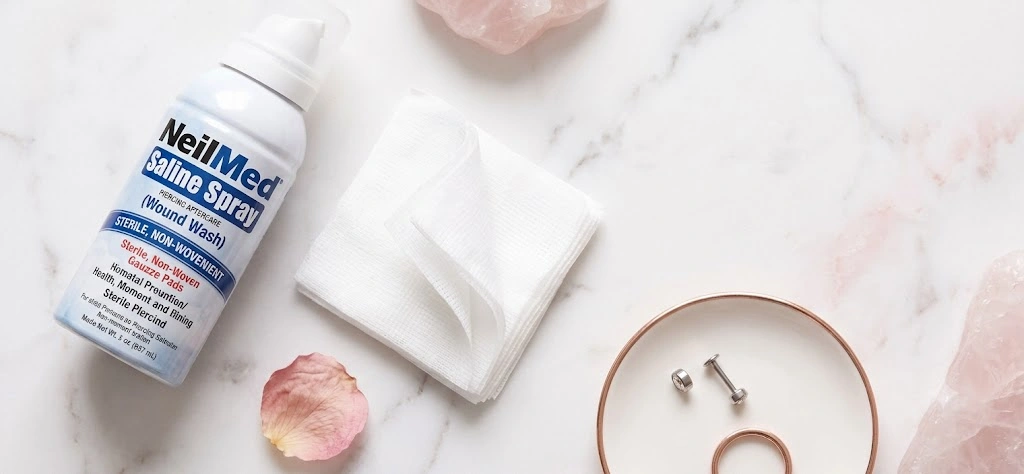
Clean twice daily with saline solution. Avoid touching with unwashed hands. Here’s the full routine that piercers recommend.

Helix piercings rate around 4–5 out of 10 on the pain scale. Here’s what the initial pierce feels like and how to manage it.
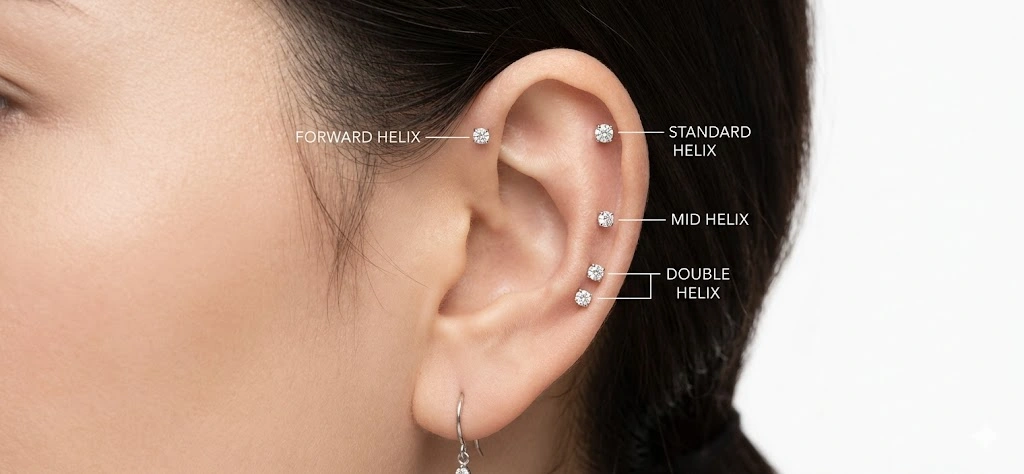
From a simple single helix to a triple stacked look — explore every variation and find the style perfect for your ear anatomy.

Bumps are common in helix piercings. Most are irritation bumps — not keloids. Learn how to identify yours and treat it at home.
What Is a Helix Piercing?
The helix piercing is one of the most popular cartilage piercings in the world. It passes through the outer rim of the upper ear — a curved area of cartilage called the helix. Unlike lobe piercings, cartilage is thicker and denser, which means healing takes longer but the result is a stunning, versatile look.
Helix piercings are highly customizable — you can choose the exact placement along the rim, the jewelry style, and even stack multiple piercings together. Whether you want a subtle single stud or a bold curated ear, helix piercings are the foundation of most ear styling projects.
Location: Outer upper cartilage rim | Healing: 6–12 months | Pain: 4/10 | Price: $30–$90 | Jewelry: Stud or hoop (hoop only after full healing)
Why Is It So Popular?
The helix sits in a sweet spot — it’s visible enough to be a style statement but subtle enough for professional environments. It pairs beautifully with tragus piercings, conch piercings, and lobe jewelry to create an editorial “ear stack” look that dominates social media and fashion editorials alike.
Types of Helix Piercings
The helix rim spans a wide area of your ear, giving piercers and clients plenty of options for creative placement. Here are all the main types:
Not everyone has the anatomy for every type of helix piercing. Always consult with a professional APP-certified piercer before deciding on placement. A good piercer will tell you what works for your ear.
Helix Piercing Pain: What to Really Expect
Pain is the #1 question people ask before getting any piercing. Here’s an honest, detailed answer based on real client experiences and professional piercer insights.
Pain Scale: 4 out of 10
Most people rate helix piercing pain between 3–5 out of 10. The initial needle feels like a sharp pinch and pressure — over in under a second. Cartilage is denser than lobe tissue, so there’s more resistance, but a skilled piercer using a sharp, sterile needle makes the process very quick.
What Hurts More — The Needle or the Jewelry?
Many people actually find the jewelry insertion slightly more uncomfortable than the needle itself. This is completely normal. The area may throb for a few hours after the piercing, but over-the-counter pain relief (ibuprofen) handles this well.
| Piercing | Pain Score | Healing Time |
|---|---|---|
| Helix | 4/10 | 6–12 months |
| Tragus | 4/10 | 6–12 months |
| Conch | 5/10 | 9–12 months |
| Industrial | 6/10 | 6–12 months |
| Lobe | 2/10 | 4–6 weeks |
Helix Piercing Aftercare: The Complete Routine
Proper aftercare is the single most important factor in how well — and how quickly — your helix piercing heals. Follow this daily routine from day one.
Use a sterile saline spray (0.9% sodium chloride) — never alcohol, hydrogen peroxide, or Dettol. Spray directly on both sides of the piercing.
Use a clean paper towel or non-woven gauze. Cloth towels can harbor bacteria. Let the area dry completely — moisture encourages bacteria.
Never touch, twist, or rotate your jewelry. This is one of the biggest myths — rotating jewelry actually causes trauma and delays healing.
Try sleeping on the opposite side or use a travel pillow so your ear isn’t compressed. Change your pillowcase every 1–2 days during initial healing.
No swimming pools, hot tubs, lakes, or rivers for the first 3 months. Showering is fine — just let water run over it, don’t soak.
NeilMed Wound Wash Saline is the gold-standard recommended by the Association of Professional Piercers (APP). It’s preservative-free, comes in a fine mist, and costs under $10.
What NOT to Do
- ❌ Do not use antiseptic creams, Neosporin, or Bactine
- ❌ Do not rotate or twist the jewelry — ever
- ❌ Do not use cotton buds (fibers can get caught in the jewelry)
- ❌ Do not change jewelry before 6 months minimum
- ❌ Do not wear over-ear headphones during healing
- ❌ Do not apply makeup, hairspray or dry shampoo near the piercing
Helix Piercing FAQ
Ready to Get Pierced?
Read our full piercing studio checklist before booking — make sure your piercer meets every safety standard.
Read the Checklist →